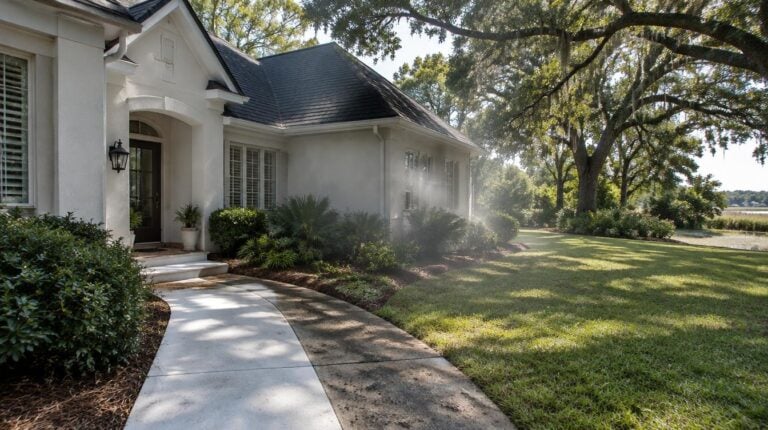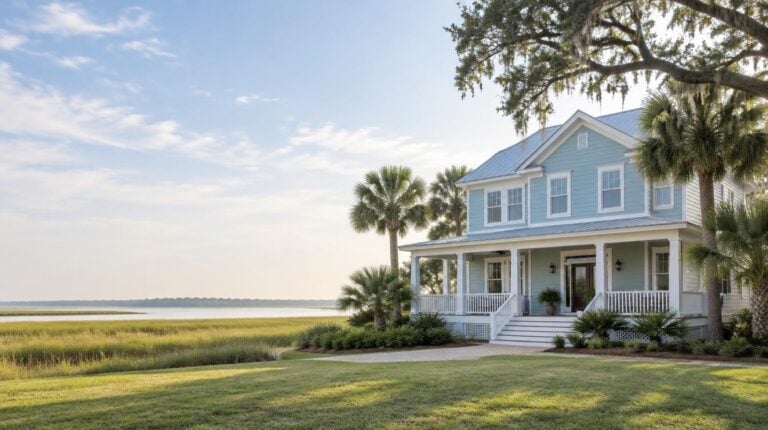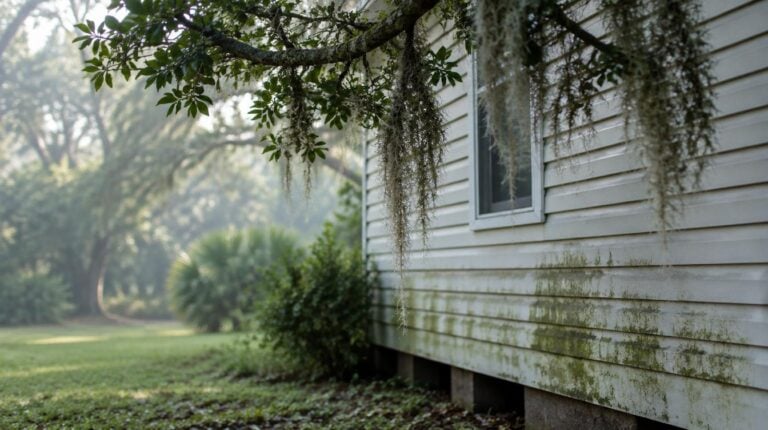
Living a few miles from the ocean is one of the best parts of Mount Pleasant, but it comes with upkeep. If you are looking into pressure washing Mount Pleasant SC homes, you are probably dealing with some mix of salt film, green mildew on the north side of the house and maybe a polite letter from your HOA. This guide covers what causes the buildup, how to clean common siding types safely and how often most homes need attention.
Key takeaways
- Salt air leaves a dull, sticky film on siding, windows and metal that traps dirt and moisture.
- Mildew and algae grow fast in Mount Pleasant’s heat and humidity, especially on shaded walls.
- Many HOAs ask homeowners to keep siding, roofs, driveways and fences free of visible stains and growth.
- Hardie (fiber cement) and vinyl siding should be soft washed, not blasted with high pressure.
- Most coastal homes benefit from a house wash at least once a year.
How salt air affects Mount Pleasant homes
Homes near the harbor, the marsh and the barrier islands get a steady dose of salt carried on the breeze. You may not see it right away, but run a finger across a window or a car parked outside for a week and you will feel the gritty, slightly sticky film.
That salt film causes a few problems over time:
- It dulls finishes. Painted trim, siding and metal railings lose their shine and look chalky.
- It holds moisture. Salt attracts water from humid air, which keeps surfaces damp longer and gives mildew a better place to grow.
- It traps dirt and pollen. The sticky layer catches spring pollen, dust and organic debris, so the house gets dirty faster.
- It is hard on metal. Light fixtures, outdoor HVAC housings, metal roofs and railings can show corrosion sooner when salt is left in place.
Regular washing removes that layer before it builds up. A gentle rinse with the right cleaning solution does more for a coastal home than an occasional high-pressure blast.
Mildew, algae and the Lowcountry climate
Add salt to Mount Pleasant’s long, humid summers and you have ideal conditions for mildew and algae. Green growth tends to show up first on north-facing walls, under deep eaves and anywhere shaded by live oaks or tall shrubs. Roofs often develop black streaks from Gloeocapsa magma, an airborne algae common across the Lowcountry.
Concrete gets its share too. Driveways and sidewalks collect mildew in shady spots, along with tire marks, rust from irrigation water and leaf stains. Brick pavers and pool decks can turn slick with growth. Our driveway and concrete cleaning service addresses those flat surfaces.
HOAs and exterior cleaning letters
Mount Pleasant has many communities with homeowners associations. Neighborhoods such as Park West, I’On and Dunes West are examples of planned communities where an HOA or architectural review board may set standards for how homes look from the street. Every association writes its own rules, so it is always worth reading your covenants or asking your management company what applies to you.
Common items that show up in HOA exterior maintenance notices include:
- Visible mildew or algae on siding, soffits and trim
- Black streaks on roofs
- Stained or dark driveways and sidewalks
- Discolored or green fences
- Dirty gutters, especially black streaks on the outside face
If you receive a letter, do not panic. Most notices simply give you a window of time to take care of the issue. Read it closely so you know which surfaces are mentioned and when the deadline is. Then schedule cleaning early enough to finish well before that date. Some homeowners keep a copy of their invoice or before and after photos in case the HOA asks for confirmation.
Better yet, get ahead of it. A yearly house wash and a regular driveway cleaning keep most homes well clear of exterior upkeep notices.
Cleaning Hardie and vinyl siding the right way
Most homes in Mount Pleasant are clad in either fiber cement (often called Hardie board, after the James Hardie brand) or vinyl. Both hold up well in our climate, and both can be damaged by the wrong cleaning method.
Fiber cement (Hardie board) siding
Fiber cement is durable, but it is painted, and that paint is what you see. High pressure can etch or strip the finish, scar the surface and force water into joints and nail holes. Siding manufacturers generally recommend low-pressure cleaning for this reason. A soft wash applies a cleaning solution at low pressure to kill mildew and lift dirt and salt, followed by a gentle rinse. The paint stays intact and the house looks refreshed.
Vinyl siding
Vinyl is lighter and more flexible. Too much pressure can crack panels, loosen them or drive water up behind the laps, where it can soak sheathing and insulation. Vinyl also shows chalky oxidation and green mildew clearly, especially on lighter colors. Soft washing removes the growth and film without stressing the panels.
For either type, a professional house wash covers siding, soffits, trim, gutters and windows in one visit. Triple J uses eco-friendly cleaning solutions and soft washing for delicate surfaces, and we rinse and protect landscaping as we work.
How often should Mount Pleasant homes be cleaned?
Every property is different, but these intervals are a good starting point for coastal homes:
- House wash: once a year, or twice for homes close to the water or under heavy shade.
- Roof soft wash: every two to four years, when black streaks begin to appear.
- Driveways and walkways: once a year, more often for shaded concrete.
- Gutters: at least twice a year, plus a check after big storms.
Late spring, after the yellow pollen season, and early fall, after the summer humidity, are both good times to schedule.
What does pressure washing in Mount Pleasant cost?
Pricing depends on the size and height of the home, the surfaces involved and how much buildup there is. As a general industry range, a residential house wash often falls somewhere in the few-hundred-dollar range, with larger multi-story homes running higher. Bundling services like house, driveway and gutters can make each one more cost effective. Prices vary, and Triple J gives free on-site estimates.
Frequently asked questions
Is pressure washing safe for Hardie board siding?
High pressure can damage the painted finish on fiber cement and push water into joints. Low-pressure soft washing is the safer way to clean Hardie siding and is the method most manufacturers point homeowners toward.
How do I get rid of salt film on my house?
Salt film comes off with a proper wash using a suitable cleaning solution and a thorough rinse. Homes close to the water often need this once or twice a year to keep finishes and metal fixtures in good shape.
What should I do if my HOA sends a cleaning letter?
Read the notice to see which surfaces are listed and when the deadline is, then schedule cleaning with time to spare. Keeping your invoice or photos can help if the HOA asks for confirmation.
Do you serve all of Mount Pleasant?
Yes. Triple J works throughout Mount Pleasant and nearby areas. Visit our Mount Pleasant service area page for more details.
Get a free estimate in Mount Pleasant
Whether you are fighting salt film, chasing a deadline from your HOA or just want your home to look its best, Triple J Power Washing can help. We are a family-owned, licensed and insured company serving Mount Pleasant and the greater Charleston area. Request your free estimate or call (843) 870-7644 today.