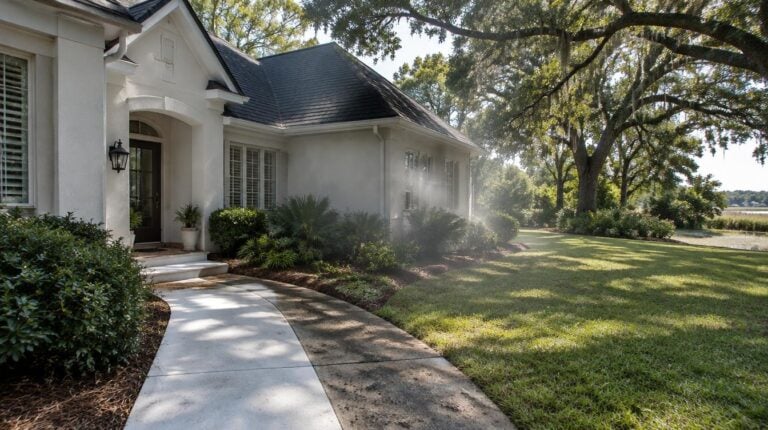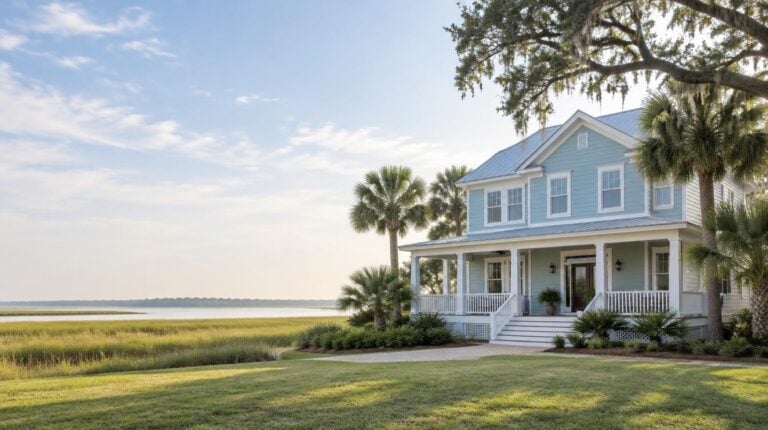
If you have lived in the Charleston area for more than a year, you have probably noticed a green or black film creeping across the shady side of your house. Mildew on siding is one of the most common problems Lowcountry homeowners deal with, and it can come back surprisingly fast. Here is why it happens, where it shows up first and what you can do to keep your home looking clean.
Key takeaways
- Heat, humidity and frequent rain give mildew and algae nearly ideal growing conditions year-round.
- Shade from live oaks, pines and nearby homes slows drying and speeds up growth.
- North-facing walls usually turn green first because they get the least direct sun.
- Trimming, gutter care and airflow help, but regular soft washing is what actually removes it.
- Most Lowcountry homes benefit from a house wash about once a year.
What is that green film, anyway?
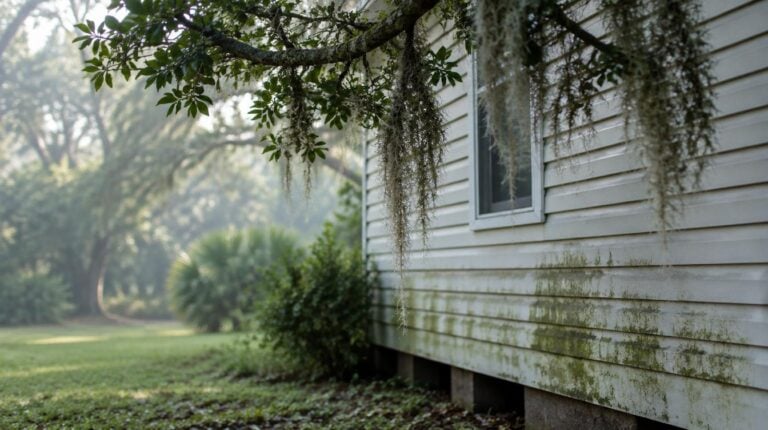
The growth on your siding is usually a mix of mildew, mold and algae. Most of what you see in the Lowcountry is green algae and mildew, with darker black spots in the most stubborn areas. These organisms float in the air as spores and settle on any surface that offers moisture, shade and a little bit of food, such as pollen, dust and organic debris.
On vinyl siding it shows up as a green haze, especially along the bottom edges of panels where water lingers. On Hardie board and painted surfaces it can look like gray or black speckling. On stucco and brick it often appears as dark streaks or patches that soak into the texture.
Why mildew grows so fast in the Lowcountry
Humidity and heat
Our climate is the main reason. Charleston summers are hot and muggy, and humidity often stays high well into the fall. Spores need moisture to grow, and in the Lowcountry your siding rarely gets a chance to fully dry out. Morning dew, afternoon thunderstorms and humid nights keep surfaces damp for long stretches.
Shade
Sunlight dries surfaces and slows growth. Shade does the opposite. Homes tucked under big trees or built close to neighbors get less direct sun and stay damp longer. That is why two houses on the same street can look completely different after a year.
North-facing walls
In our part of the world, the north side of a house gets little to no direct sun for much of the year. It is almost always the first wall to turn green. If you only notice mildew on one side of your home, check your compass. It is probably the north side, or a side shaded by trees.
Live oaks, Spanish moss and pollen
Live oaks are one of the best things about living here, but they create perfect conditions for growth on your home. They throw heavy shade, they drop leaves, twigs and Spanish moss onto roofs and into gutters, and they hold moisture close to the house. Then comes spring. In March and April, pine and oak pollen coats everything in a yellow film, and that pollen gives mildew and algae a food source.
Salt air and marsh moisture
Homes near the coast, the marsh and the islands deal with extra moisture and salt air. Places like James Island and Johns Island sit close to tidal creeks and pluff mud, where the air stays damp. That added moisture keeps siding wet longer and helps growth take hold.
Why you should not ignore it
A little green on the siding might seem like a cosmetic issue, but it is worth dealing with sooner rather than later.
- It spreads. Mildew and algae grow outward and become harder to remove the longer they sit.
- It holds moisture. Growth keeps the surface damp, which is hard on paint, caulk and trim over time.
- It stains. Left long enough, it can leave lasting marks on porous surfaces like stucco, brick and wood.
- HOAs notice. Many neighborhoods in Summerville, Mount Pleasant and Daniel Island send notices when siding or roofs look dirty.
- It affects curb appeal. If you plan to sell, a green north wall is one of the first things buyers see.
How to slow mildew down
You cannot change the climate, but you can make your home less welcoming to growth.
- Trim trees and shrubs. Keep branches off the roof and shrubs a couple of feet away from the walls so air can move and surfaces can dry.
- Keep gutters clear. Overflowing gutters soak siding and fascia. Clear gutters after heavy leaf and pollen drops. Our gutter cleaning service can help.
- Check your sprinklers. Irrigation heads that spray the house keep the lower siding wet every day. Adjust them to hit only the beds and lawn.
- Improve drainage. Make sure downspouts carry water away from the foundation, not along the wall.
- Rinse off pollen. A gentle garden hose rinse after yellow season helps remove the food source before it fuels new growth.
How to remove mildew on siding the right way
The most important thing to know is that high pressure is not the answer. Blasting vinyl siding can force water behind the panels, and blasting stucco or painted Hardie board can cause damage. Pressure also tends to knock off the surface layer while leaving the roots behind, so the green comes back quickly.
Soft washing is the better approach. A low-pressure application of a cleaning solution kills the mildew and algae, then a gentle rinse carries it away. Because the growth is treated at the root, the siding stays cleaner longer. Triple J uses eco-friendly cleaning solutions and protects your plants by wetting them down before and rinsing after. Learn more about our house washing service.
How often should you clean your siding?
For most homes in the Charleston area, a professional house wash once a year keeps mildew under control. Homes with heavy shade, lots of trees or a waterfront location may need it every 6 to 9 months, especially on the north side. Homes in sunny, open lots can sometimes stretch a little longer. Many homeowners like to schedule right after spring pollen season, so the house looks its best for summer.
Frequently asked questions
Why is mildew only on one side of my house?
It is usually the north-facing or most shaded side. That wall gets the least sun, stays damp the longest and gives mildew the best conditions to grow.
Can I just use bleach and a pressure washer myself?
High pressure can damage siding and force water behind panels, and the wrong mix can harm plants. A low-pressure soft wash with proper plant protection is safer and lasts longer.
How fast will mildew come back after cleaning?
It depends on shade and moisture, but a proper soft wash usually keeps siding clean for about a year in typical Lowcountry conditions. Heavily shaded homes may see regrowth sooner.
Is mildew on siding harmful?
On the exterior it is mainly a cosmetic and maintenance issue, but it holds moisture against paint, caulk and trim. Removing it regularly helps protect those materials.
Get a free estimate
Tired of watching the green creep back across your siding? Triple J Power Washing serves homes across the Lowcountry, including Summerville, James Island and Johns Island. Request a free estimate or call (843) 870-7644.