Brick looks like it can take anything, so a lot of people assume pressure washing brick is as simple as turning the machine up and going to work. In Charleston, that assumption can cause real damage. Between centuries-old soft brick downtown and the humidity that grows mildew on every shaded wall, brick here needs a gentler, smarter approach.
Key takeaways
- Yes, high-pressure washing can damage brick, especially older, softer brick and lime-based mortar.
- Historic Charleston brick is often softer than modern brick and should be treated with extra care.
- White, powdery deposits are often efflorescence, a salt issue tied to moisture, not dirt.
- Low pressure and a soft wash approach clean brick effectively without eroding the surface.
- When in doubt, test a small hidden area first.
Can pressure washing damage brick?
The short answer is yes. Brick is fired clay, and its toughest part is the outer face, sometimes called the fire skin. That outer layer helps shed water. A narrow, high-pressure stream can wear through it, leaving the softer interior exposed. Once that happens, the brick absorbs more water, weathers faster and can start to flake or crumble.
Mortar is even more vulnerable. Mortar joints are meant to be softer than the brick so that the wall can move and breathe. High pressure can blast out loose or aged mortar, open gaps and drive water deep into the wall. That can lead to leaks, interior moisture problems and costly repointing.
Common signs that brick has been cleaned too aggressively include:
- Pitted, sandy or rough brick faces
- Visible “wand marks” or striping where the spray passed
- Mortar joints that look recessed, hollow or washed out
- New flaking or spalling after the next freeze or wet season
Historic soft brick and mortar in Charleston
Charleston has some of the oldest brick buildings in the country. Much of the historic brick downtown was handmade or fired at lower temperatures than modern brick, which can make it softer and more porous. Many older walls were laid with lime-based mortar, which is designed to be softer and more flexible than the cement-based mortar used today.
That combination is beautiful and durable when it is cared for properly, but it does not respond well to aggressive cleaning. On older brick, even moderate pressure can do lasting harm. Some historic properties are also subject to local preservation guidelines, so owners of older homes may want to check what applies before any exterior work.
Newer brick homes in places like Summerville, Goose Creek and Mount Pleasant are generally made with harder, machine-fired brick and cement-based mortar. They can handle a bit more, but the same basic rule applies: more pressure is not better.
What is efflorescence?
If you see white, chalky or powdery deposits on your brick, you may be looking at efflorescence rather than dirt or mildew. Efflorescence happens when water moves through brick or mortar, dissolves natural salts and carries them to the surface. When the water evaporates, the salts stay behind as a white residue.
A few important points about efflorescence:
- It is a moisture symptom. The real question is where the water is coming from. Common sources include clogged gutters, leaking downspouts, sprinklers hitting the wall and poor drainage at the foundation.
- Pressure washing can make it worse. Soaking the wall with high-pressure water pushes more moisture into the brick, which can bring up even more salts as it dries.
- It often needs a different approach. Light efflorescence can sometimes be dry brushed. Heavier deposits may need a cleaner made for masonry, applied carefully. Fixing the moisture source is what keeps it from returning.
Keeping your gutters clear and downspouts directing water away from the house is one of the simplest ways to reduce efflorescence. Our gutter cleaning service can help with that part.
The right way to clean brick: low pressure and soft washing
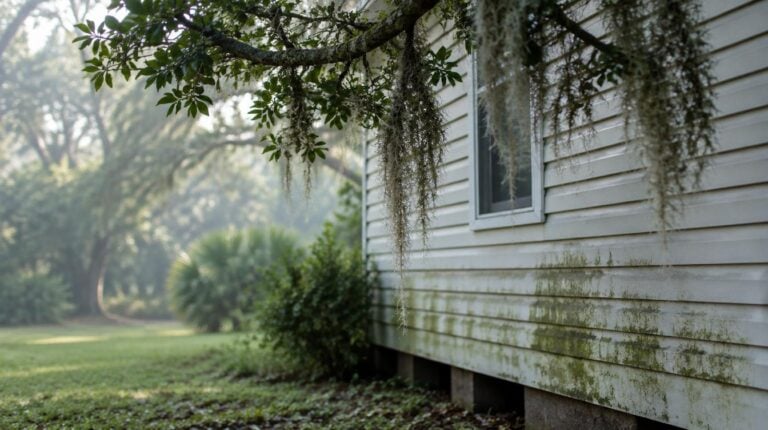
Most brick in the Lowcountry is stained by organic growth: green algae, black mildew, moss and lichen, especially on north-facing walls and areas shaded by live oaks. Those growths are living things. Blasting them off with high pressure removes the surface layer but often leaves roots behind, so the stain returns quickly.
A soft wash approach works better. Here is how it generally goes:
- Inspect first. Check the brick and mortar for cracks, loose joints and soft spots. Damaged areas need repair, not cleaning.
- Protect the surroundings. Wet down plants, cover sensitive fixtures and make sure windows and doors are closed.
- Pre-wet the brick. Wetting the wall first helps keep cleaning solution near the surface instead of soaking deep into the masonry.
- Apply the cleaning solution at low pressure. A brick-appropriate solution is applied gently and allowed to dwell so it can break down mildew and algae.
- Rinse gently. A low-pressure rinse removes the loosened growth and residue without stressing the brick or joints.
- Test small areas. On older or uncertain brick, start with a small, hidden section and check the results before doing the whole wall.
At Triple J, we use eco-friendly cleaning solutions and soft washing for delicate surfaces, and we treat brick with the care it needs. It is part of our house washing service, and the same approach applies to brick on commercial building exteriors and storefronts.
What about brick pavers and walkways?
Brick pavers and walkways are built to handle foot traffic, but the joints between them are often filled with sand that high pressure can blow right out. Moderate pressure with a surface cleaner, plus re-sanding where needed, usually gives the best result. See our driveway and concrete cleaning page for flat surfaces.
What does brick cleaning typically cost?
Cost depends on the size of the area, how high the walls are, the type and age of the brick and how heavy the staining is. As a general industry range, brick cleaning for a typical home may be similar to a full house wash, often in the few-hundred-dollar range, with historic or multi-story buildings running higher because of the extra care and time involved. Every job is different, and Triple J gives free on-site estimates.
Frequently asked questions
What PSI is safe for washing brick?
There is no single number for every wall, because brick age and condition vary. In general, low pressure with a wide fan tip and a proper cleaning solution is safer than relying on high pressure. Historic soft brick calls for the gentlest approach.
Will pressure washing remove efflorescence?
Not reliably, and it can make it worse by pushing more water into the brick. Light efflorescence can often be dry brushed. The lasting fix is finding and stopping the moisture source.
Can old Charleston brick be cleaned safely?
Yes, with the right method. Older brick and lime mortar need low pressure, gentle solutions and testing on a small area first. Owners of historic properties may also want to check local preservation guidelines.
Why does green growth keep coming back on my brick?
High-pressure cleaning often removes the surface stain but leaves roots behind. Shade and moisture also help it return. A soft wash kills the growth at the root, so the brick stays clean longer.
Get a free estimate for brick cleaning
If your brick is streaked with mildew or white with efflorescence, Triple J Power Washing can take a look and recommend the safest way to clean it. We are a family-owned, licensed and insured company serving Charleston and the surrounding Lowcountry. Request your free estimate or call (843) 870-7644.