If you have black streaks on roof shingles, you are in good company. Drive through almost any Charleston neighborhood and you will see the same dark stripes running down from the ridge line. Those streaks are not soot, dirt or a sign that your roof is failing. In most cases they are a living organism, and once you know what it is, the right way to deal with it makes a lot more sense.
Key takeaways
- Most black streaks on Lowcountry roofs are an algae called Gloeocapsa magma, not mold from a leak.
- The algae feeds on the limestone filler in asphalt shingles and thrives in our heat, humidity and shade.
- Pressure washing a shingle roof can strip the protective granules. Soft washing kills the algae at low pressure.
- Most Charleston-area roofs benefit from cleaning every two to four years, depending on shade and exposure.
What causes black streaks on roof shingles
The culprit is usually Gloeocapsa magma, a type of blue-green algae (technically a cyanobacteria). It spreads through airborne spores that drift from roof to roof on the wind, which is why you often see a whole street develop streaks over a few years.
When the algae first lands on a roof, it is barely visible. As the colony grows, it develops a dark outer coating that protects it from UV light. That coating is what you see as black or dark green streaks. Rain washes the growth downhill, so the stains tend to run in vertical lines from the top of the roof toward the gutters.
Modern asphalt shingles contain crushed limestone as a filler. The algae feeds on that calcium carbonate, so the roof itself becomes its food source. Older roofs and roofs with more limestone in the shingle mix tend to show streaks sooner.
Why the Lowcountry is a perfect home for roof algae
Charleston gives this algae everything it wants. We have long, hot summers, high humidity nearly year round, afternoon thunderstorms that keep surfaces damp, and plenty of shade from live oaks and pines. Roof slopes that face north, or that sit under heavy tree cover, stay wet longer after rain and dew. Those are almost always the sections that streak first and worst.
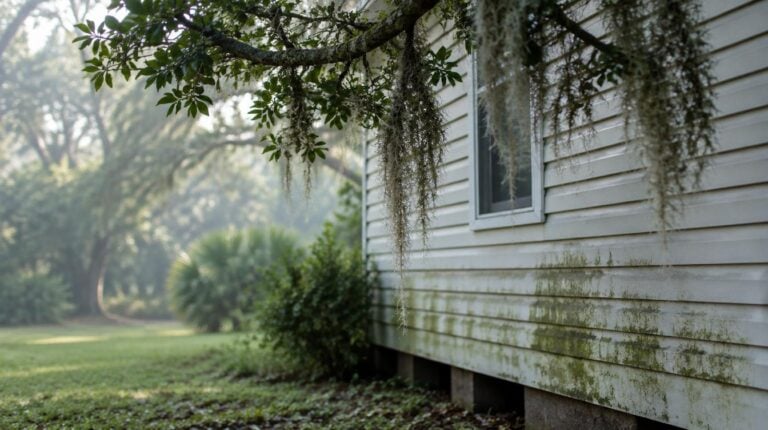
Falling debris adds to the problem. Spanish moss, oak leaves, pine straw and spring pollen collect in valleys and along the eaves, hold moisture against the shingles and give algae, moss and lichen a head start.
Is it harmful, or just ugly?
In the early stages, the streaks are mostly a cosmetic issue. They make a house look older and less cared for, which matters if you are selling or if your HOA sends reminders about exterior upkeep. Over time, though, there are a few practical concerns worth knowing about.
- Heat absorption. Dark streaks absorb more sunlight than clean shingles, especially on lighter colored roofs. That can add heat to your attic during a Charleston summer.
- Moisture retention. Heavy algae growth holds water against the shingle surface. Constant moisture is never good for roofing materials.
- A foothold for moss and lichen. Algae often comes first, and moss and lichen follow. Those growths have roots that can lift shingle edges and work into the granule layer.
- Shorter shingle life. Organic growth left in place for years can contribute to granule loss and premature aging, which brings a costly roof replacement closer.
None of this happens overnight, but it is a good reason not to ignore streaks for a decade.
Why soft washing, not pressure washing
This is the most important point in this whole article. A shingle roof should not be cleaned with high pressure.
Asphalt shingles are covered in small ceramic-coated granules. Those granules protect the asphalt from UV damage and give the shingle its color. A pressure washer strong enough to blast off algae is also strong enough to strip those granules, which can leave bare spots, shorten the life of the roof and create problems with the manufacturer if you ever need to make a claim. Many shingle manufacturers specifically advise against high-pressure cleaning for this reason.
Soft washing works differently. A soft wash system applies a diluted, roof-safe cleaning solution at very low pressure, roughly the force of a garden hose. The solution kills the algae, moss and lichen at the root instead of trying to knock them off. After a short dwell time, the surface is gently rinsed. Because the organism is actually killed, the roof stays clean longer than it would if the growth were just scraped or sprayed away.
Soft washing also protects the rest of your home. A good crew pre-wets and rinses landscaping, protects plants near the drip line, and manages runoff from the gutters and downspouts. At Triple J, we use eco-friendly cleaning solutions and soft washing for delicate surfaces like roofs, and our roof cleaning service is built around that low-pressure approach.
What about metal roofs?
Metal roofs are popular on the islands and in newer coastal builds, and they get their own version of the problem. Algae, mildew and salt film can dull the finish and leave dark staining around seams and fasteners. Metal roofs also call for a low-pressure, soft wash approach so the coating is not damaged.
How often should you clean your roof?
There is no single schedule that fits every house, but here is a practical guide for the Charleston area:
- Full sun, little tree cover: every three to four years is often enough.
- Partial shade or north-facing slopes: every two to three years.
- Heavy shade under live oaks or pines: you may see streaks return in about two years.
A good rule is to clean the roof when you first notice streaks forming rather than waiting until the whole surface is dark. Light growth is easier to remove and puts less stress on the shingles. Keeping the gutters clear helps too, since clogged gutters hold moisture along the roof edge. If yours are full, pair your roof wash with gutter cleaning so the whole drainage path is clear.
What does roof cleaning typically cost?
Roof soft washing prices vary widely based on roof size, pitch, number of stories, how heavy the growth is and how easy the roof is to access. As a general industry range, many homeowners see residential roof cleaning quotes somewhere between a few hundred dollars and the low thousands for larger or steeper roofs. Every house is different, which is why Triple J gives free on-site estimates.
Can you prevent black streaks from coming back?
You cannot stop spores from drifting in on the wind, but you can slow regrowth:
- Trim back branches that shade the roof and drop debris on it.
- Keep valleys, eaves and gutters clear of leaves, pine straw and Spanish moss.
- Ask your roofer about zinc or copper strips near the ridge, which some homeowners use to discourage growth.
- When it is time to replace the roof, ask about algae-resistant shingles.
- Schedule a soft wash at the first sign of new streaks.
Whether you live under the big oaks in Charleston or in a shaded subdivision in Summerville, a little maintenance goes a long way toward keeping your roof clean and protecting its lifespan.
Frequently asked questions
Are black streaks on my roof mold?
Usually not. In the Lowcountry, black streaks on asphalt shingles are almost always Gloeocapsa magma, an airborne algae. It is different from the mold you might find inside a home after a leak.
Will pressure washing remove roof algae?
It can remove the stain, but it can also strip the protective granules from your shingles and shorten the life of the roof. Soft washing kills the algae at low pressure and is the safer method for shingle roofs.
How long does a roof soft wash last?
Most Charleston-area roofs stay clean for roughly two to four years after a proper soft wash. Heavily shaded roofs and north-facing slopes tend to see regrowth sooner.
Is roof soft washing safe for my plants?
When it is done carefully, yes. A good crew pre-wets and rinses landscaping, protects plants near the drip line and manages runoff. Triple J uses eco-friendly cleaning solutions and takes those steps on every roof job.
Get a free roof cleaning estimate
If those black streaks are spreading across your roof, Triple J Power Washing can take a look. We are a family-owned, licensed and insured company based in North Charleston, and we soft wash roofs across the Lowcountry. Request your free estimate online or call (843) 870-7644 to schedule a visit.