When people talk about getting their house cleaned, they usually just say pressure washing. But the choice between soft washing vs pressure washing matters a lot, because the wrong method can strip a roof, crack stucco or force water behind siding. Here is a plain-spoken look at how each method works and which parts of your Lowcountry home need which one.
Key takeaways
- Pressure washing uses high water pressure to physically remove dirt and stains from hard surfaces.
- Soft washing uses low pressure plus a cleaning solution that kills mildew, algae and mold at the root.
- Roofs, siding, stucco and painted surfaces usually get soft washed.
- Concrete driveways, sidewalks and many patios usually get pressure washed.
- Most homes need both methods, used on the right surfaces.
What is pressure washing?
Pressure washing uses a machine that pushes water out at high pressure, often several thousand PSI. The force of the water does the cleaning. It knocks loose dirt, grime, gum, mud and surface stains, and a surface cleaner attachment lets a crew clean flat concrete evenly without stripes.
Pressure washing is great on hard, durable surfaces that can handle the force. Think of a concrete driveway that has collected tire marks, red clay and years of dirt. High pressure, used correctly, brings that concrete back to a bright, even finish.
The downside is that the same force that cleans concrete can damage softer materials. High pressure can etch wood, lift paint, gouge stucco, break window seals and push water behind siding where it can lead to rot or mold inside the wall.
What is soft washing?
Soft washing uses low pressure, closer to a strong garden hose, combined with a cleaning solution designed to break down organic growth. The solution does most of the work. It is applied, allowed to dwell, and then rinsed off gently.
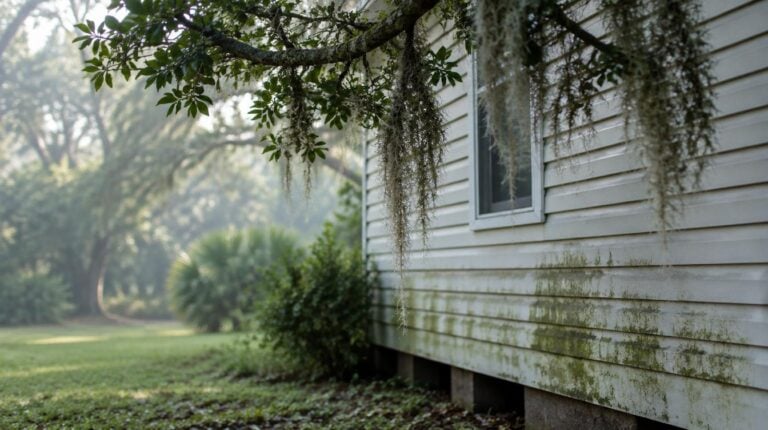
The key difference is that soft washing kills what is growing on your home instead of just knocking off the top layer. Mildew, algae, mold and lichen have roots that grip into textured surfaces. Blasting them with water often leaves those roots behind, and the green and black staining returns quickly. Soft washing treats the growth so the surface stays clean longer.
At Triple J, we use eco-friendly cleaning solutions and take care to protect your plants and landscaping by wetting them down before and rinsing after.
Which surfaces get soft washed?
Anything delicate, painted or prone to organic growth is usually a soft wash job.
Roofs
Asphalt shingle roofs should be soft washed, period. Those black streaks you see on roofs all over the Charleston area are caused by Gloeocapsa magma, an algae that feeds on the limestone filler in shingles. High pressure can strip the protective granules off shingles and shorten the life of the roof. Soft washing kills the algae without that damage. Metal roofs also benefit from a gentle approach to protect coatings and fasteners. Learn more on our roof cleaning page.
Siding
Vinyl siding and Hardie (fiber cement) siding should be soft washed. High pressure aimed at overlapping vinyl panels can drive water up and behind them. Hardie board is tough, but its painted finish can be damaged by too much pressure. Soft washing removes the green mildew film that grows so readily in our humid climate. Our house washing service is built around this method.
Stucco
Stucco is porous and textured, which makes it a magnet for mildew and algae. It can also crack, chip or show wand marks under high pressure. Many historic homes downtown and newer homes alike use stucco, and soft washing is the safe way to clean it.
Brick and painted surfaces
Brick looks tough, but older brick and mortar can be soft and easily eroded. Painted trim, shutters, doors and fences can lose paint under high pressure. Soft washing or a carefully controlled low-pressure rinse is the better fit.
Which surfaces get pressure washed?
Hard, unpainted surfaces that need physical scrubbing are where pressure washing shines.
- Concrete driveways and sidewalks. These handle higher pressure well, especially with a surface cleaner that gives an even finish. Oil, rust and clay stains may get a pre-treatment first.
- Concrete patios and pool decks. Uncoated concrete cleans up well with pressure.
- Commercial walkways, parking areas and drive-thrus. High-traffic hardscapes collect gum, grease and grime that pressure removes efficiently.
See our driveway and concrete cleaning page for more on flatwork.
The in-between surfaces
Some surfaces need a blend of both approaches.
- Pavers. Pavers can handle moderate pressure, but too much can wash out joint sand. A careful technique, sometimes with a pre-treatment for growth, works best.
- Wood decks and fences. Wood needs lower pressure and the right angle to avoid furring or splintering the grain. A cleaning solution helps lift mildew and graying.
- Gutters. The outside faces of gutters often have black “tiger stripes” that need a cleaning solution and gentle rinse rather than raw pressure.
Our deck, fence and patio cleaning service adjusts the method to each material.
Why the method matters so much in the Lowcountry
Charleston area homes face heat, high humidity, shade from live oaks and plenty of rain. That is a perfect recipe for mildew and algae. Because growth comes back fast here, simply blasting it off is a short-term fix. Soft washing gets at the root of the problem, which means your home stays cleaner longer between visits.
Homeowners in shaded, wooded neighborhoods, like many in Mount Pleasant and on the islands, often notice this most on north-facing walls and roofs under heavy tree cover.
There is also a cost angle. Damage from too much pressure, like water trapped behind vinyl, etched stucco or a roof that lost its granules, can turn a simple cleaning into a repair bill. Choosing a crew that matches the method to the surface protects your home and your wallet. If you are unsure what your home needs, an on-site look is the easiest way to find out.
Frequently asked questions
Is soft washing as effective as pressure washing?
On siding, roofs and stucco, soft washing is usually more effective because the solution kills mildew and algae at the root. On bare concrete, pressure washing is typically the better tool.
Can pressure washing damage my roof?
Yes. High pressure can strip the protective granules from asphalt shingles and shorten the roof’s life. Roofs should be soft washed.
Is soft washing safe for my plants?
When done carefully, yes. Good crews pre-wet plants, use appropriate solutions and rinse landscaping afterward to protect it.
Does my home need both methods?
Most do. A typical visit might soft wash the siding and roof and pressure wash the driveway and sidewalks.
Get a free estimate
Not sure which method your home needs? Triple J Power Washing will look at your property and recommend the right approach for every surface. Request a free estimate or call (843) 870-7644.